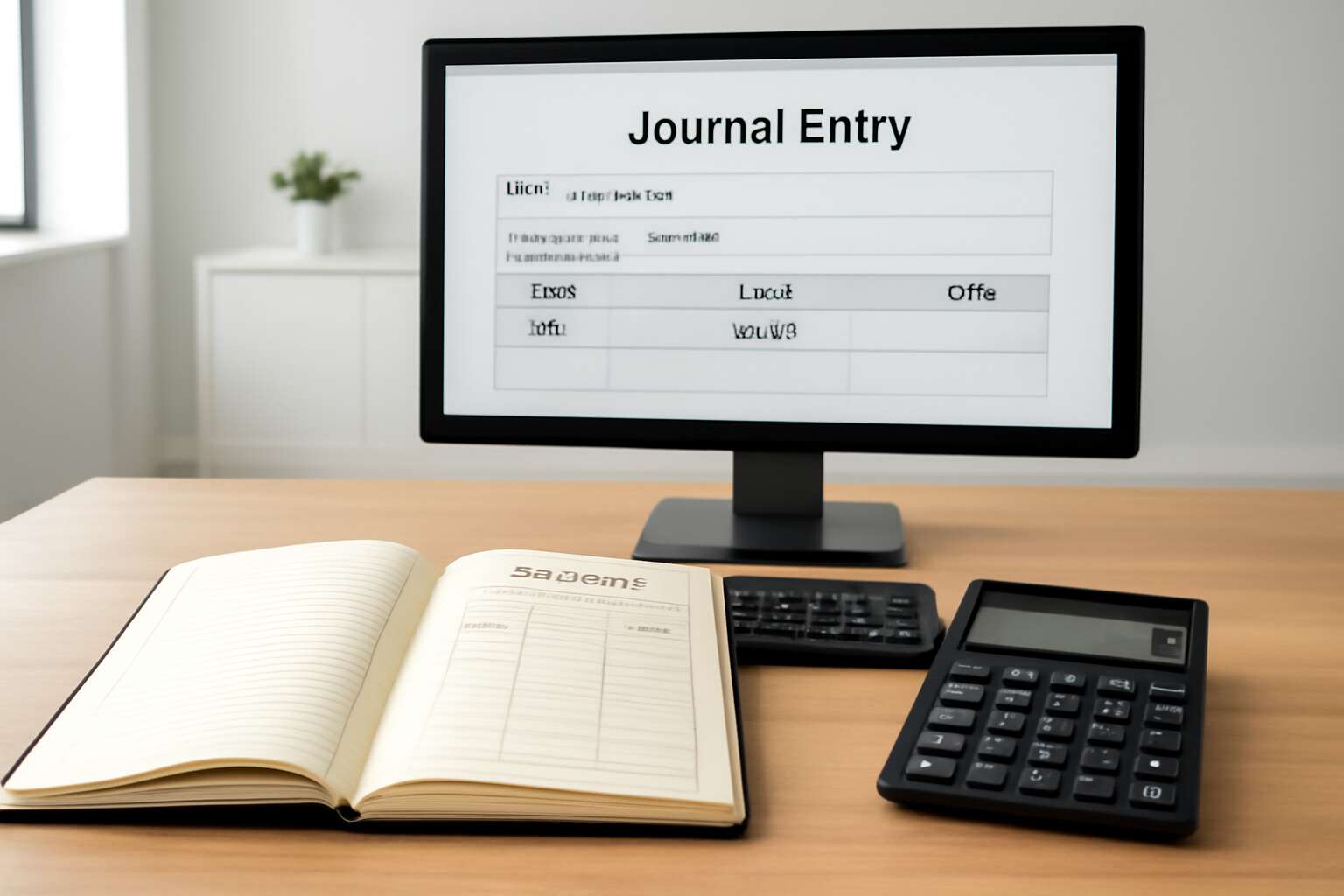
Overview of rent journal entries
What a rent journal entry is
Rent is more than a monthly debit; it’s the heartbeat of a workspace economy. The office rent journal entry translates space into numbers, a precise snapshot for decision makers. In South Africa, such entries must align with VAT rules and leases.
At its core, a rent journal entry records the move from cash or accruals to the recognized rent expense, reflecting prepayments or end-of-period adjustments.
- Debit rent expense
- Credit cash or bank when paid
- Credit prepaid rent for upfront payments
- Account for VAT as applicable
Clarity in this entry supports budgeting and audit readiness, especially within South Africa’s evolving office market!
Key accounts involved in rent transactions
Space is money in motion—the rent line in your books is a compass showing whether the workspace strategy is on track. In South Africa, this compass must align with VAT rules and lease classifications.
The office rent journal entry translates space into numbers. It records the shift from cash or accrual basis to recognized rent expense, accounting for upfront prepayments and end-of-period adjustments.
- Rent expense
- Cash or Bank
- Prepaid rent
- VAT payable
- Accrued rent
In the evolving SA office market, clarity in these entries helps budgeting and audits.
When to record rent expense vs prepaid rent
Rent is the metronome of your workspace, and in South Africa the tempo must keep pace with VAT and lease rules. As one CFO notes, “Space is money in motion”—a truth that turns every date into a decision and every invoice into a story.
The office rent journal entry translates space into numbers, recording the shift from cash or accrual to recognized rent expense and pulling in upfront prepayments, VAT payable, and end-of-period adjustments.
- When rent is paid in advance and benefits extend into future periods (prepaid rent)
- When rent is incurred but not yet paid (accrued rent)
- At period end, adjust for VAT and any remaining prepayments
Clarity in these entries sharpens budgeting and audits in the evolving SA office market.
Common mistakes in rent entries and how to avoid them
In South Africa, rent is a budget heartbeat, especially as VAT and lease rules flex. A CFO once quipped, “Space is money in motion,” and the line sticks: every invoice becomes a story your ledgers tell. The office rent journal entry tallies those stories—turning cash or accrual into recognized rent expense and capturing upfront prepayments, VAT payable, and end-of-period adjustments.
Overview of rent journal entries should be crisp. Common mistakes include misclassifying prepaid rent as an expense, overlooking VAT on leases, and missing end-of-period accruals. In SA, these slips ripple through audits and budgets.
- Misclassifying prepaid rent
- Overlooking VAT on leases
- Missing end-of-period accruals
These patterns remind managers that clarity and consistency steer credibility, with the office rent journal entry keeping space’s value visible while respecting VAT and lease rules.
Recording rent in the general ledger
Appropriate debit and credit entries for monthly rent
Rent in a South African office isn’t just a line item—it’s the pulse that keeps your numbers honest. Recording the office rent journal entry correctly preserves the integrity of the general ledger. For a typical monthly rent, you debit Rent Expense and credit Cash/Bank when payment occurs; if the landlord hasn’t been paid yet, credit Accounts Payable. If VAT applies, you may post VAT Recoverable separately and reflect the gross payable to the landlord. This keeps the expense transparent and the tax records aligned with SA VAT rules.
- Rent expense debited for the net amount
- VAT recoverable debited if applicable
- Credit to Cash/Bank or Accounts Payable depending on payment timing
To keep the ledger clean, consider these core elements of the monthly entry.
This balance keeps your SA financials coherent with tax reporting and operational reality.
Handling prepaid rent and existing lease incentives
Rent is the heartbeat of a business’s ledgers—and misposting can turn cash flow into a melodrama. “The lease is the engine of the P&L,” a wary CFO told me.
Recording rent in the general ledger hinges on prepaid rent and lease incentives. Prepaid rent goes to an asset and exits as rent expense monthly; the classic office rent journal entry shows Debit Prepaid Rent, Credit Cash, then Debit Rent Expense, Credit Prepaid Rent. Lease incentives are liabilities to be amortized against rent expense. In SA, VAT and cross-checks stay tidy.
- Prepaid rent: Debit Prepaid Rent; Credit Cash/Bank.
- Monthly recognition: Debit Rent Expense; Credit Prepaid Rent.
- Lease incentives: Debit Rent Expense; Credit Lease Incentive (liability) to spread the benefit.
Adjusting entries for accruals and deferrals at period end
Rent is the heartbeat of a balance sheet, and at period end the ledger hums with accruals and deferrals. The office rent journal entry must capture what was incurred this month even if cash moved last week, and what belongs in a future period must wait, like a song left unfinished. In South Africa, VAT alignment adds discipline, ensuring every charge sits correctly on the books and cross-checks keep the rhythm intact.
At period end, two adjustments keep the numbers honest:
- Accrued rent expense at period end: Debit Rent Expense; Credit Accrued Liabilities (Rent Payable).
- Deferred rent (prepaid portions): Debit Prepaid Rent; Credit Rent Expense.
Treating late payments, discounts, and penalties
Rent sits at the heart of every South African small business ledger—like a roof over a hardworking homestead. A precise office rent journal entry keeps books honest and cash flowing. Recording rent in the general ledger turns space and services into numbers you can trust.
When late payments, discounts, or penalties come into play, treat them carefully within the office rent journal entry:
- Late payments: Debit Rent Expense; Credit Cash or Accounts Payable; note any penalties separately.
- Discounts for early payment: reduce Rent Expense or record a Discounts Received, depending on policy.
- Penalties: Debit Rent Expense; Credit Accrued Liabilities or Penalties Payable.
In South Africa, VAT alignment keeps charges on the books in harmony with VAT returns, ensuring a smooth rhythm for the office rent journal entry.
Templates and examples for practice
Sample monthly rent entry for a standard lease
Office life hums with a steady drumbeat of numbers, and the office rent journal entry is the quiet metronome behind the month’s balance. In South Africa’s bustling commercial scene, a single, well-crafted entry can anchor a budget and steady the nerves of leadership. Templates and examples for practice reveal the rhythm of a standard lease, turning abstract figures into a tangible story the ledger can tell with grace and precision.
- Date of entry
- Tenant and landlord
- Amount in rand (ZAR)
- Debit and credit accounts (e.g., Rent expense, Cash/Bank)
- Reference or description
Sample monthly rent entry for a standard lease: Debit Rent expense 50,000 ZAR; Credit Cash/Bank 50,000 ZAR. If prepaid rent exists, debit Prepaid rent and credit Cash, while the monthly balance is drawn into Rent expense.
Example with prepaid rent and amortization of prepaid assets
Templates for practice turn abstract numbers into a tactile exercise, and in South Africa’s offices, the discipline of a well-constructed office rent journal entry keeps teams aligned. When you run through prepaid rent scenarios, the templates reveal patterns that steady budgeting and reporting with confidence!
Consider a prepaid rent example: on signing, you debit Prepaid rent and credit Cash for the full amount. Each month, you debit Rent expense and credit Prepaid rent for the portion that applies. The result is a transparent amortization of prepaid assets.
- Amortization timeline aligned with lease term
- Template fields: date, parties, amount, accounts, reference
- Practice variants: change prepaid periods and end-of-month adjustments
Journal entries for operating vs finance leases under current standards
Templates turn the abstract world of lease numbers into a gripping, auditable storyline. For office rent journal entry practice, well-crafted templates illuminate how operating leases and finance leases diverge under current standards, while keeping your South Africa-based books aligned and ready for audit. The suspense comes from patterns: when rent is paid, when depreciation or interest kicks in, and how end-of-month adjustments cascade through the ledger.
- Date, parties, amount, accounts, reference
- Lease term, classification, and monthly amortization schedule
- End-of-period adjustments and disclosures
Consider these template fields to guide your practice:
End-of-month variants and lease-term tweaks sharpen accuracy and confidence across SA offices while complying with current standards, and they translate well into real-world reports.
Cross-border lease scenarios and currency considerations
A concise template can turn the tangle of cross-border leases into a crisp audit narrative. When practice templates for office rent journal entry scenarios are aligned with currency considerations, South Africa–based books stay auditable even as FX moves. I’ve seen teams sharpen risk signals by mapping rent payments, depreciation, and interest to a single ledger path—while keeping the storytelling honest and compliant.
Templates for practice often include a compact checklist that travellers between currencies can follow:
- Core entry details: date, parties, amount, and account mapping
- Currency and FX considerations: reporting currency and exchange rate used
- Lease term, amortization schedule, and end-of-period adjustments
- Audit support: schedules, disclosures, and references
These cues turn practice into performance for cross-border scenarios, ensuring clarity for readers and auditors alike.
Compliance, taxes, and audit considerations
Tax treatment of rent expenditures and lease incentives
Across the South African office market, tracking rent is more than bookkeeping; it’s a compass guiding compliance, taxes, and audit readiness. The office rent journal entry anchors the narrative of monthly closings with clarity and grace.
Tax treatment in South Africa hinges on whether rent carries VAT and how lease incentives are recognized. When a lease incentive reduces rent or is amortized, the corresponding entries must align with policy and be traceable for audits. A precise entry acts as a shield against misstatements and penalties—even as you keep operations fluid and the books honest.
- VAT treatment and input tax credits on commercial leases
- Treatment of lease incentives and amortization over the lease term
- Maintaining an audit trail with robust supporting documents
In every ledger line, the dialogue between compliance, taxes, and audit becomes a quiet chorus—the office rent journal entry standing as witness to integrity.
Documentation and audit trail for rent transactions
Compliance, taxes, and audit readiness in South Africa hinge on a single truth: robust documentation turns rent into a transparent narrative. In SA, many lease audits reveal gaps in support, making the office rent journal entry a frontline control for VAT treatment and incentive amortization. A precise, traceable entry acts as both compass and shield—clarifying monthly closings and easing scrutiny from revenue authorities.
Documentation and audit trail essentials for rent transactions include:
- Signed lease amendments and approval records
- Invoices detailing VAT treatment and input credits
- Amortization schedules and period-end reconciliations with supporting invoices
At its heart, the office rent journal entry ties human diligence to financial honesty. A well-maintained trail makes audits predictable, decisions transparent, and governance credible—proof that ethics can live in ledgers.
Regulatory implications under GAAP/IFRS and lease accounting standards
In South Africa, regulatory scrutiny on leases is sharp and GAAP, IFRS, and local practice dictate how every line is framed. The office rent journal entry becomes a hinge between contract and compliance, shaping VAT treatment, incentives, and audit trails.
Under IFRS 16 and comparable lease standards, leases bring assets and liabilities onto the balance sheet, so precise entries are essential for accurate disclosure and tax reporting.
A careful, well-supported journal entry strengthens governance, making period closings predictable and audits less arduous for revenue authorities—and it keeps the narrative of ethics steady in the ledgers.




0 Comments