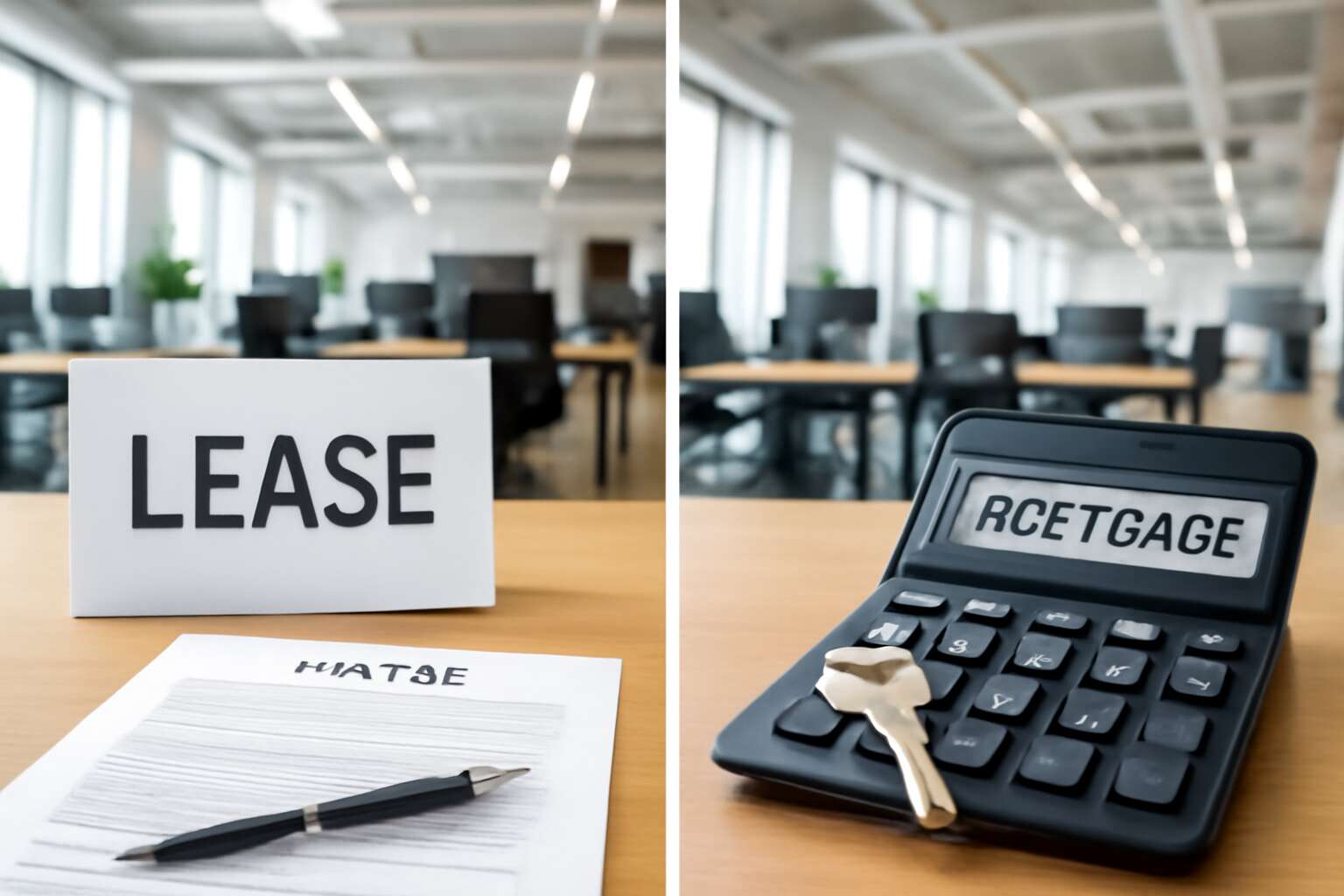
Lease vs Ownership: Office Space Evaluation
Cost dynamics of renting
In South Africa’s markets, space is more than a square footage fear; it’s a compass. The choice between office rent vs buy is a test of flexibility, risk, and long-term vision in fast-changing hubs.
Cost dynamics of renting tilt cash flow toward predictability, while ownership converts outlays into potential equity. Financing, maintenance, and tax treatment carve distinct paths through SA’s economic terrain, shaping when lock-in pays off and when it doesn’t.
- Upfront vs ongoing costs and working capital
- Maintenance, improvements, and landlord boundaries
- Tax treatment, depreciation, and capital implications
As space decisions loom, the tension exposes appetite for advancement, restraint, and the moral weight of commitments that outlive quarterly reports!
Upfront and long-term ownership costs
In SA markets, office rents don’t sit quietly; they swing with the market like a yacht on a chop. The office rent vs buy decision is a tempo test—flexible today, potentially equity-rich tomorrow—as leases reset every 3 to 5 years on average.
Upfront costs aren’t just the monthly cheque; think deposits, fit-out budgets, and legal fees that can surprise you in a single sprint. Long-term ownership transforms outlays into potential equity, but it also binds cash to a mortgage, maintenance, and planned improvements.
Tax treatment and depreciation carve the tax map, with owner-occupied spaces enjoying certain allowances and tenants navigating VAT on capex where applicable. The tug-of-war reveals a company’s appetite for growth, restraint, and the stubborn arithmetic of balance sheets.
Flexibility and scalability considerations
In SA, leases reset every 3 to 5 years, a rhythm that keeps planning honest and nimble. When weighing office rent vs buy, flexibility is currency and equity the quiet undertow. The space you choose should match your growth tempo—room to breathe today, mindful of tomorrow.
Flexibility and scalability aren’t abstract; they surface in how quickly you adjust headcount, relocate, or expand into adjacent floors. To gauge these traits, consider:
- Speed of renegotiation and space reconfiguration
- Ability to sublease or release portions of the space
- Retrofit potential and utility efficiency to avoid wasted sites
The decision spotlights culture and risk appetite—some teams prize control and predictability, others prize liquidity and tempo. Either path reveals itself when you imagine a year of growth, a hiring surge, or a strategic pivot.
Tax and accounting implications
When you weigh office rent vs buy, tax and accounting can tilt the balance. In SA, the numbers on a lease can sing differently once VAT, depreciation, and balance-sheet impact are added. “Tax-first thinking pays dividends,” as one CFO likes to say.
Under IFRS 16, the lessee records a right-of-use asset and a lease liability, shifting rent from a simple expense to a capitalized commitment. Ownership means depreciation or wear-and-tear allowances, possible interest deductions, and improvements treated as capital expenditures.
Key considerations include:
- VAT treatment and input credits
- Depreciation vs lease amortization
- Rates, maintenance, and improvements deductions
Financial Modeling for Office Decisions
Total cost of occupancy under different scenarios
Across South Africa’s bustling business districts, financial modeling turns uncertainty into a navigable map. A striking stat shows teams that stress-test total occupancy costs across scenarios cut budgeting surprises by up to 15%. When we chart the total cost of occupancy under different scenarios, the office rent vs buy question becomes a spectrum of strategic paths rather than a single verdict.
- Lease terms, escalations, and renewal options shaping cash flow
- Capital outlay versus financing terms and depreciation timing
- Service charges, maintenance, and operating costs under volatility
With these levers, sensitivity to inflation, vacancy, and financing terms reveals which path endures market shocks. The narrative grows livelier as numbers reflect risk, reward, and the rhythm of growth—an atlas guiding space decisions across South Africa.
Financing options and cash flow impact
Across South Africa’s bustling business districts, disciplined financial modeling turns guesswork into forecastable reality. The office rent vs buy debate plays out as a spectrum of strategic paths, not a binary verdict—especially when occupancy scenarios are stress-tested, cutting budgeting surprises by up to 15%.
Financing options shift cash flow from year one to year five. Consider debt service, depreciation timing, and the pace of capex in your model—and weigh these practical financing options:
- Traditional bank loan with amortization
- Sale-and-leaseback to unlock capital while occupying space
- Internal funding or equity release to preserve liquidity
Numbers stay meaningful when we map inflation, vacancy, and renewal cycles to liquidity. The office rent vs buy question becomes a living narrative—one that guides resilience and growth in South Africa’s evolving work landscape!
Depreciation, deductions, and equity benefits
Across South Africa’s bustling business districts, financial modeling for office decisions reads like a map where possibility outshines guesswork. The office rent vs buy debate unfurls as a spectrum of strategic paths—the tempo of depreciation, deductions, and equity shaping a future where space becomes an asset rather than a purchase of time.
Depreciation timing converts brick and glass into tangible cash-flow levers, while deductions soften the tax curve and free capital for reinvestment. Ownership brings equity benefits that compound with mortgage payments and rising rents, offering a potential cushion against inflation and vacancy. In a disciplined model, track wear and tear, capex rhythm, and the course of loan terms to reveal the true cost of each path.
- Depreciation shields cash flow
- Deductions on fittings and improvements
- Equity build-up through mortgage financing
Here, the numbers transform into a living narrative, guiding resilience and growth in South Africa’s evolving work landscape!
Sensitivity analysis for market conditions
South Africa’s office market can swing like a Cape gust, and that makes sensitivity analysis a necessity, not a luxury. Even a double-digit vacancy swing can tilt cash flows. When financial modeling for office decisions is done well, it steps in as a compass for the office rent vs buy debate, testing how market conditions bend the numbers. Base-case forecasts hold steady, while shocks to vacancy, rent escalations, capex pace, and interest rates reveal what each path might truly cost.
Rather than chase a single forecast, the model embraces plausible futures—optimistic, cautious, and somewhere in between—so leaders can see how debt service, equity build, and cash flow shift under different market moods.
Key sensitivity levers include:
- Vacancy rate shifts
- Rent escalation trajectories
- Financing terms and interest rate moves
- Capex timing and asset lifecycle
These narratives keep the conversation grounded in market humours and inflation realities.
Non-Financial Factors Shaping Office Choices
Location strategy and employee experience
Location is more than square footage; it shapes culture and output. “Location can make or break team energy,” says a leading workspace strategist. In South Africa, commuting times and safety profiles push firms toward well-connected hubs that keep people connected and engaged.
Location strategy and employee experience start with the spine of the city you pick. Consider these non-financial levers:
- Transit access and major routes
- Walkability and on-site amenities
- Safety and security for staff after hours
- Hybrid-friendly layouts and collaboration zones
- Proximity to clients and partner ecosystems
Beyond cost, the daily experience matters. The right mix of transit, amenities, safety, and flexible layouts can lift collaboration, retention, and morale, tipping the balance in favor of the space—even when weighing office rent vs buy.
Customization, build-out, and control
Non-financial factors shaping office choices run deeper than the rent. Customization, build-out, and control let you mirror your brand, support collaboration, and future-proof your team. In South Africa, a space that feels intentional can boost morale and retention—well beyond numbers on a spreadsheet. When you weigh office rent vs buy, the environment you design matters as much as the price.
- Tailored shell and core systems that align with workflows
- Faster move-in through pre-approved, scalable build-outs
- Branding and finishes that reinforce culture
- Acoustic design and flexible collaboration zones
- Long-term adaptability to headcount changes and hybrid work
These elements are not decorative afterthoughts; they shape daily experience, retention, and output. The office rent vs buy decision isn’t just about price—it’s about designing around your people and your future headcount.
Exit strategy and space re-positioning
“Space is not a backdrop; it’s culture in motion,” a South African operations leader once told me. In the office rent vs buy equation, non-financial factors decide the mood long before the invoice. Exit strategy and space repositioning are strategic lenses, not afterthoughts.
Wellbeing, brand alignment, and collaboration flow shape daily experience far more than sticker price. A space designed for hybrid work invites spontaneous connection and thoughtful quiet—critical when headcount shifts across SA’s cities.
To stay agile, plan for exit and repositioning as part of your culture, not a financial contingency. Consider these non-financial levers:
- Flexible subletting and phased exits that protect culture
- Modular build-outs that adapt to headcount swings
- Rebranding-ready finishes and acoustics for evolving teams
These choices keep the environment alive, influencing retention and productivity beyond any rent comparison.
Risk management under market volatility
“Space is culture in motion,” a South African operations leader once told me. In the office rent vs buy debate, non-financial factors decide the mood long before any invoice. When market volatility tightens the purse strings, wellbeing, brand alignment, and collaboration flow act as risk controls—quiet, durable, and surprisingly nimble in every pivot.
Consider these non-financial levers for resilience:
- Flexible, modular layouts that scale with headcount without culture shock
- Acoustics, finishes, and lighting designed for both collaboration and rare pockets of focused quiet
- Brand-aligned amenities and safety protocols that reinforce trust and belonging
Get the mood right, and the work follows—more reliably than the quarterly forecast, perhaps.
Market Trends and Future Outlook
Current office market dynamics
Across South Africa, prime office districts reported vacancy tightening to the mid-single digits last quarter, a clear signal that demand endures even as costs shift.
In this evolving landscape, the choice between office rent vs buy hinges on more than price—energy standards, retrofit incentives, and the ability to adapt spaces for changing teams.
Three forces shape the market now:
- Hybrid work fuels mixed-use demand
- Energy efficiency nudges retrofits
- Regional hubs diversify corporate footprints
The skyline whispers of opportunity and obligation, and the rhythm of growth unfolds for those who listen to the changing tempo of work.
Impact of hybrid work and space utilization
Across South Africa, prime office districts tightened vacancy to the mid-single digits last quarter, signaling durable demand as costs shift. When weighing office rent vs buy, the choice rests on more than price—hinging on how spaces support hybrid teams.
- Flexible occupancy models that scale with team size
- Energy-conscious retrofit incentives shape long-term value
- Regional hubs and mixed-use campuses redefine where work happens
Looking ahead, developers and occupiers will prize spaces that fuse efficiency, adaptability, and community. The calculus for space is shifting toward turning it into a strategic asset—aligned with talent, policy, and the tempo of modern work.
Regional differences and macro indicators
Across South Africa, the office market breathes unevenly, with prime districts tightening vacancy into the mid-single digits even as demand diverges by region. Market trends cast spaces as strategic assets—built for hybrid teams, energy efficiency, and community. When you weigh office rent vs buy, you measure policy winds, talent migration, and the tempo of our cities.
- Urban cores (Gauteng, Western Cape) attract talent and higher activity, influencing rental discipline and ownership appetite
- Secondary hubs and mixed-use campuses spread risk and create more predictable occupancy cycles
- Infrastructure investments and transit links tilt the balance toward location-led value creation
Macro indicators—construction momentum, energy reliability, inflation paths, and regional GDP trajectories—will shape where demand lands. Regional differences sharpen the market narrative: some cities sprint ahead with renewal demand, others favor consolidation through flexible occupancy. The future of office rent vs buy lies in places that fuse efficiency, adaptability, and belonging.
Emerging models: flexible workplaces and shared spaces
A market pulse shows flexible spaces growing in double digits, nudging office rent vs buy decisions toward agility rather than ownership alone. I see the office becoming a community hub—more a magnet for talent than a fixed asset! In this frame, emerging models center on flexible workplaces and shared spaces that scale with hybrids, reduce fixed risk, and invite deliberate collaboration across schedules.
Two models are gaining traction:
- Flexible workplaces that redraw density and leasing terms to fit actual usage.
- Shared spaces and co-working campuses that pool services, amenities, and communities.
For SA firms, the balance between location, energy efficiency, and belonging will tip the scales toward spaces that blend efficiency with humanity. The future of office rent vs buy lies in places that fuse adaptability with purpose, letting teams work together wherever they are and still feel anchored to a region’s heartbeat.




0 Comments