Most offices buy office supplies the slow way: someone notices the paper is finished and runs to a shop. Ordering on account from one supplier, against a standard list, with delivery on a fixed day each month, saves the trips and shows what the office actually uses. The catch is comparing suppliers fairly, because the price of a single pen tells you very little.
Price guideA ream of A4 80 gsm copy paper costs about R66 to R85 and a box of five reams about R320 to R400 at a national stationerA rough guide from published South African prices. The area, the term, the grade, what is included and VAT all move it.
What goes on a monthly office supplies list
- Paper and printing: A4 copy paper, toner or ink for each machine, labels.
- Stationery: pens, notebooks, files, lever arch and box files, staples, sticky notes.
- Cleaning and hygiene: toilet paper, hand soap, paper towels, refuse bags, if your cleaners do not supply them.
- Kitchen and canteen: tea, coffee, sugar, milk, dishwashing liquid.
- Safety: a stocked first aid kit, refills checked each quarter.
Write the list once with quantities per month, and every supplier can price the same basket.
Compare a basket, not a catalogue
Suppliers for office supplies discount the items people compare and make it back elsewhere. Send ten or fifteen of your most used lines with monthly quantities and compare the total, with VAT and delivery. Ask about minimum order values, delivery days to your area, how back orders are handled and whether prices are fixed for a period or change monthly.
Toner: original or compatible
Toner is usually the biggest line on the order. Compatible cartridges cost less but vary in page yield and quality, and a leased machine may have toner included already. Check your printer rental or photocopier rental agreement before buying any, and use the printing cost calculator to compare cost per page.
Account, approvals and storing stock
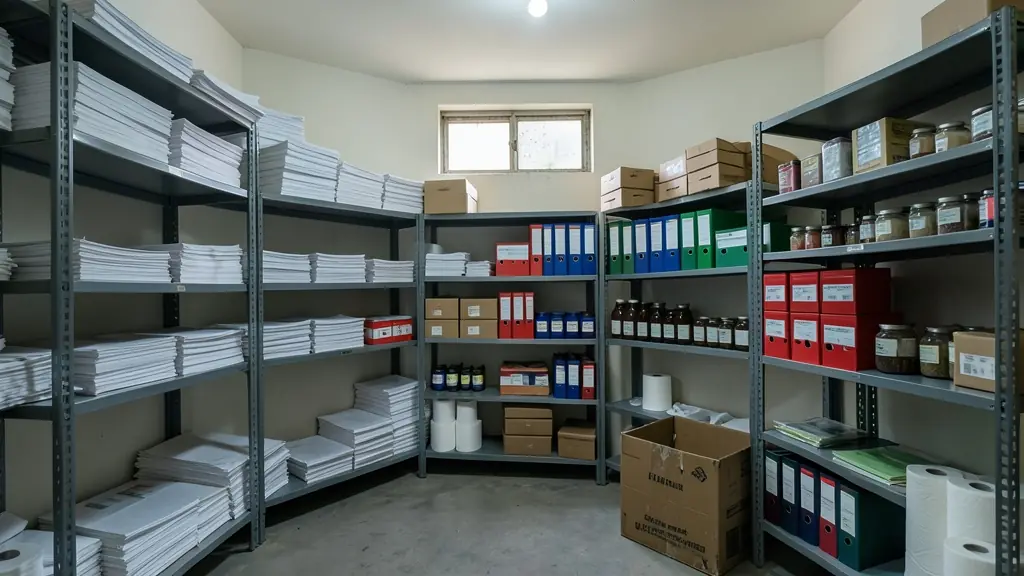
A 30 day account usually needs a credit application with company details. Ask for monthly statements and a named person who can approve orders, so ten staff are not ordering separately. Keep about one month of stock in a dry, lockable cupboard: paper curls in humid storerooms, toner goes missing from open shelves, and nobody notices the last box of staples until the auditors arrive. Do a quick count before each order so the list tracks real use. Kitchen supplies often sit alongside a coffee machine contract, so check what that already includes.
Who asks for this
- Freelancers and one person businesses
- A small quarterly order of paper, ink and files delivered to a home or rented office.
- Start ups and small teams
- One monthly order covering paper, notebooks, coffee and kitchen basics for the team.
- Professional practices
- Files, labels, copy paper and hygiene items on account, approved by the office manager.
- Companies and head offices
- A fixed list per floor or department, delivered weekly and billed on one statement.
- Schools, NGOs and churches
- Bulk paper, files and exam stationery ordered before each term on the school account.
- Branches and franchises
- The same standard order sent to every branch, with deliveries on fixed days.
- Building sites, mines and farms
- Paper, files, first aid refills and kitchen stock delivered to the site office monthly.
- Event organisers
- Name badges, notepads, pens and refreshments ordered for a training day or AGM.
Frequently asked questions
Who are the suppliers for office supplies in my area?
Send one request with your suburb and your standard list. We pass it to independent stationers and office supply firms that deliver there; we sell nothing ourselves.
Is delivery free?
Often only above a minimum order value, and only on set days. A small top up order midweek may carry a delivery fee.
Can the supplier also bring cleaning and kitchen consumables?
Many do, which keeps one invoice. Compare those lines separately, as a specialist hygiene or catering supplier can be cheaper on bulk.
Should we order once a month or as needed?
Monthly suits most offices: one delivery, one invoice, and stock levels you can track. Keep a small reserve of paper and toner for the busy weeks.